Subscribe to receive our daily tech reviews
Lorem ipsum dolor sit amet, consectetur adipiscing elit ut liqua purus sit amet luctus venenatis, lectus magna.




How AI is Changing Email Marketing in 2024
Unlock AI in email marketing to boost engagement! From personalised content to optimised send times, AI helps small businesses create smarter, more effective campaigns.
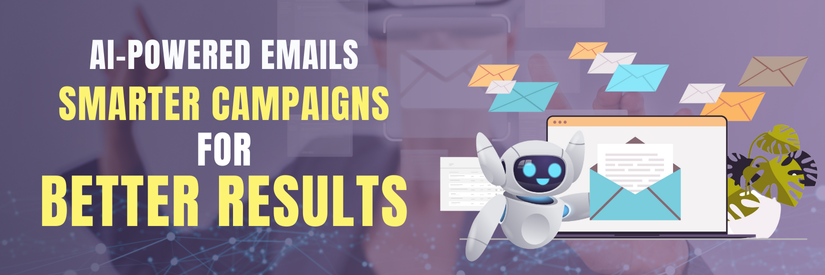
Email marketing has always been a go-to for small business owners and entrepreneurs, but things are changing fast. Email campaigns are getting smarter, faster, and more effective thanks to AI. No more manual list sorting, writing out individual emails, or guessing when to send them. AI can now handle everything from personalising emails to finding the best time to reach your audience. It’s helping small businesses compete with more prominent players by making campaigns more targeted without needing a huge team. But how exactly is AI transforming email marketing this year? Let’s see how to use these updates to grow your business.
1. Personalisation at Scale
Personalising an email meant inserting a recipient’s name or greeting in the subject line. But today, AI has taken personalisation to new heights. AI tools can analyse customer data such as purchase history, browsing behaviour, and even engagement patterns to tailor emails that feel personal to every recipient.
For instance, platforms like Mailchimp and ActiveCampaign offer AI-powered segmentation. Based on past interactions, this technology helps businesses send the right message to the right audience. You no longer need to rely on guesswork. AI analyses data and suggests what products or services to promote to each subscriber, making your emails feel more relevant and timely.
Take this as an example: You own an online retail store, and one of your customers regularly browses through your shoe category but hasn’t made a purchase. AI can trigger a personalised email showcasing a discount or new arrivals in shoes, increasing the chances of a conversion.
2. Improved Open Rates with AI-Powered Subject Lines
Crafting a compelling subject line has always been key to increasing open rates, but AI tools are revolutionising this process. Rather than trying different variations manually, AI uses natural language processing (NLP) to predict which subject lines will perform best.
Sendinblue uses AI to generate and test subject lines that are most likely to catch the reader’s attention. This means you don’t have to spend hours brainstorming. The AI tool leverages data from previous campaigns to find out what works best for your audience.
Marketers who’ve implemented AI in their email subject lines have reported noticeable improvements in open rates. More opens mean more engagement, leading to increased click-through rates (CTR) and, ultimately, more conversions.
3. Optimising Send Times
One of the most significant challenges in email marketing is determining the best time to send emails. Sending at the wrong time can lead to your message being buried in an overcrowded inbox. Traditionally, marketers have used broad generalisations, such as sending on Tuesdays at 10 AM, to improve email deliverability. But those rules no longer apply universally.
AI analyses user behaviours. It can eliminate guesswork by determining the optimal send time for each subscriber based on when they are most likely to open and engage with an email. For instance, some might consistently open their emails during lunch breaks, while others prefer to check them first thing in the morning.
Integrating AI-driven send-time optimisation into your email marketing strategies allows your message to land when it’s most relevant to each user. This leads to higher engagement and more opportunities to convert leads into paying customers.
4. Dynamic Content with AI
AI is also transforming the way we think about email content. Dynamic content allows businesses to tailor the body of an email to each recipient in real-time. So, depending on who opens the email, they might see different product recommendations, offers, or even images.
This isn’t just about changing a headline or CTA button. AI can modify email content based on the recipient’s preferences, location, or recent activity. For example, if a subscriber has shown interest in a particular product category, AI will prioritise content related to that interest.
Mailchimp uses this AI-powered dynamic content feature to help businesses create personalised email experiences beyond simple segmentation. Instead of sending one-size-fits-all campaigns, companies can leverage AI to send more relevant, engaging emails—automatically.
5. Smarter A/B Testing
A/B testing has long been essential to email marketing, helping businesses determine what works in their campaigns. However, setting up and analysing these tests can be time-consuming. AI tools simplify this process by running multiple tests simultaneously and predicting outcomes based on historical data.
AI-driven A/B testing platforms like ActiveCampaign allow marketers to test elements like subject lines, design layouts, and call-to-action buttons, quickly identifying what resonates with their audience. Instead of waiting for results over days or weeks, AI can give instant feedback and automatically adjust future emails based on the winning variation.
With more innovative A/B testing, small businesses can continuously refine their email marketing strategies without manually managing each campaign. This allows constant improvement in engagement rates, click-throughs, and overall success.
6. Enhanced Email Deliverability
Email deliverability is critical—what’s the point of creating the perfect email if it never reaches your audience? AI is responsible for emails landing in subscribers’ inboxes, not their spam folders.
By monitoring key metrics such as bounce rates, open rates, and engagement, AI tools can predict and adjust sending strategies to improve email deliverability. AI can also suggest changes to email design, content, and timing that reduce the likelihood of being flagged as spam.
Sendinblue incorporates AI into its deliverability optimisation, and emails are sent from trusted domains and structured in a way that passes through spam filters. This increases the chances of your emails being seen and acted upon by your subscribers.
7. Reducing Unsubscribe Rates with AI Insights
Subscriptions naturally leave an email list, but high unsubscribe rates can hurt your business. AI can help reduce this by analysing subscriber behaviour and predicting when someone might opt out.
For example, if AI notices a user has stopped engaging with emails, it can trigger re-engagement campaigns or suggest removing that user from your list. Tools like Mailchimp and ActiveCampaign offer this feature, allowing businesses to maintain healthy email lists of engaged recipients. It’s far better to focus on a smaller, active list than trying to keep uninterested users on board.
Key Takeaway
AI in email marketing is no longer a luxury—it’s necessary for small business owners and entrepreneurs looking to stay competitive in 2024. Whether improving personalisation, optimising send times, or enhancing email deliverability, AI offers tools to make your campaigns more effective with less manual effort. Integrating AI-powered platforms like Mailchimp, ActiveCampaign, and Brevo (EX- Sendinblue) into your email marketing strategy will improve open and click-through rates and provide a better experience for your subscribers. And when your audience feels like the emails they receive are tailored just for them, they’re far more likely to stay engaged and loyal.